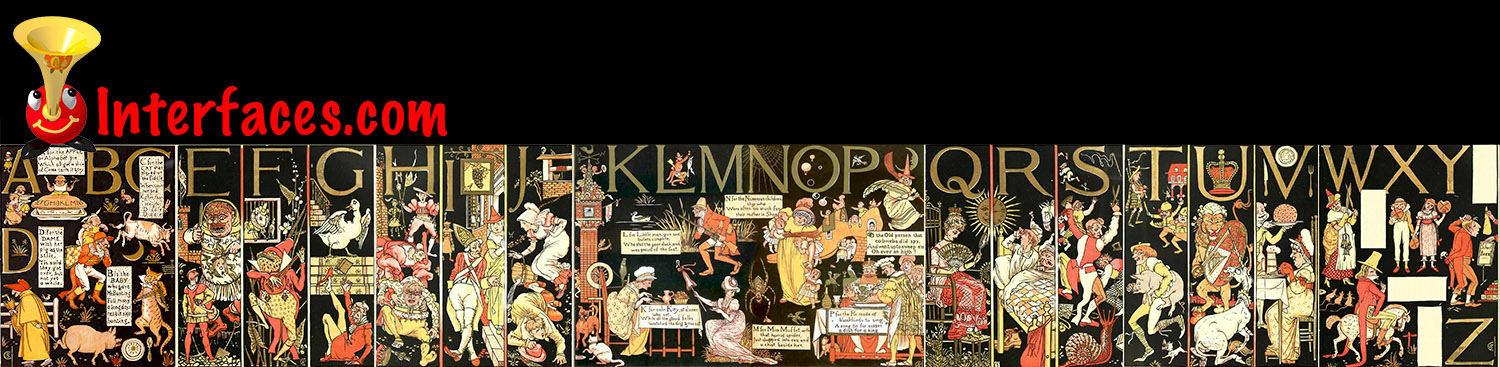
“Lost in Translation” was a wonderful movie by Sofia Coppola, starring Bill Murray and Scarlett Johansson. It depicted the delicious confusion of Western tourists in total Japanese cultural emersion. In particular, the scenes where Bill Murray shoots a liquor commercial for the Japanese market are simply priceless. In retrospect, I see where Ms. Coppola got her ideas. Her cousin, Nicholas Cage, have been making wonderfully odd (to our sensibilities) commercials for years. He clearly had stories to share. Here are a few of his gems, courtesy the World Wide Web: and But it’s not only Japan that surprises our/my cultural biases. This morning, my husband and I went to a local grocery store in Rome, Italy. In the cheese section, there was a little paper bottle of parmesan cheese with a mouse of the package. The mouse didn’t work for me at all! So much for cultural differences. Here’s a small collection of ads for McDonalds from all over the world. Please compare it to the packaging and menus for this restaurant chain that I’ve posted here in the past: “Cultural World Domination”. Notice all of the anchoring errors, metaphor mistakes, cultural biases, mirroring errors, and general cognitive and cultural…
Cultural Bias
Conceptual Design, Cultural Bias, Flow, Interaction Design, Interface Design, Language, Perception, Pipsqueak Articles, Product Design Strategy, Scaffolding, Working Memory
The Haptic Feel of Books versus eBooks
by Olga Werby •
We’ve traveled to Rome for our family vacation this year, and aside from a few summer reading books that I couldn’t find in an eBook format, we relied on our two Kindles and 3 iPads for our family reading needs. This is the second summer we brought primarily electronic versions of books—”The Count of Monte Cristo” is much easier to read when it fits into your hand and doesn’t weigh a ton… In the days before the Kindle and iPad, we carried an extra suitcase just for books. But there are drawbacks to buying and reading eBooks. Below are some of my thoughts and experiences—the cogitations of a voracious reader. Time & Progress As I was reading my novels, I found myself repeatedly trying to figure out where in the book I was. How far along was I? When is the next natural break (chapter, section end)? How many pages are there to the end of the chapter, end of the section, end of the book? These were not idle curiosities about my reading accomplishments, although when you do finish reading the book version of “The Count of Monte Cristo”, you do have a sense of having read something. An…
Cultural Bias, Cultural Differences, Ethnographic & User Data, Pipsqueak Articles, Product Design Strategy
Cultural World Domination
by Olga Werby •

When we first arrived in New York as Russian refugees many, many years ago, everything was so confusing. I remember lying on the bed in a hotel room somewhere in Brighton Beach, Brooklyn, with my whole family (mother, father, sister, and me) and watching commercials on TV. There was a stick figure running around the screen screaming “Cherio-o-o-o-o-o-o-o-s.” We debated for hours trying figure out what it was about. And then there was a time when my parents let me buy a bag of Cheetos. I almost vomited when I tried one—in Russia, things that looked like that were sweet. The complete mismatch between my expectations and the actual taste made me gag. To this day, I hate the stuff! So when companies are on the path of world domination with their products, understanding cultural differences in background knowledge, perceptual expectations, preferred ways of doing things is a must. To see how some giants customize their products to make them more culturally sensitive, I took a look at McDonalds‘ menus from around the world. Check it out: Note: I went looking for the old Cheerios commercial, but could only find this one—it’s close, but the one we saw didn’t have…
Background Knowledge, Conceptual Design, Cultural Bias, Interface Design, Pipsqueak Articles, Reference
Evolutionary Theory of Beauty
by Olga Werby •
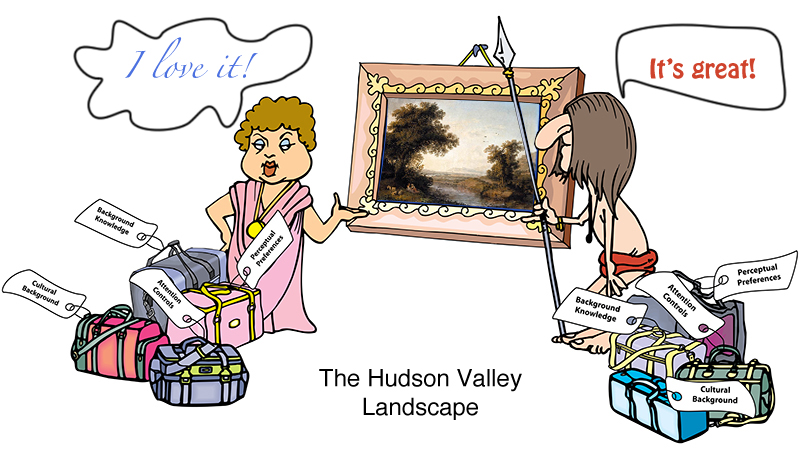
David Brooks: The Social Animal I just finished reading a book by David Brooks, “The Social Animal.” While initially hesitant, I really enjoyed reading it. The book, a fiction, bundles together a lot of interesting information on the latest (and not so latest) advances in our understanding of the workings of the human mind. So it’s easy to see why I would like it! While there are many ideas worth considering in the book, I picked a small detail mentioned in passing: the evolutionary pull towards the love of a “Hudson Valley Landscape.” The Hudson Valley Landscape has the following features: The landscape has lots of open space interspersed with tall vegetation. There’s a far horizon that defines the space: a valley, a glade, a river basin, a farm, etc. There’s a clear evidence of fresh water: a river, a stream, a pond, etc. There are a few large trees in the foreground, offering shade, fruit, safe escape, or all of the above. There’s a path from the foreground to the background. There are people and man-made structures visible somewhere. There are “safe” animals or birds visible: cows, ducks, deer, etc. Amazingly, all cultures respond positively to this genre of…
Background Knowledge, Background Knowledge Errors, Cultural Bias, Cultural Differences, Pipsqueak Articles
Cultural Difference: Kids Stories
by Olga Werby •
I came across this short video: “The White Wolf” by Pierre-Luc Granjon. It is an 8 minute animation short about two brothers living in a small French village. Please pay attention to the story-line (I know it is an obvious thing to pay attention to): would it have been received well in US? Note that it is not more gruesome than “Snow White”… This is why cultural context is so important to product design and why I teach the class!
Background Knowledge Errors, Cultural Bias, Group Decision Errors, Mental Model Traps, Misapplication of Problem Solving Strategies, Pipsqueak Articles, Product Design Strategy, Scaffolding
Knowledge, Context, & Expectation
by Olga Werby •
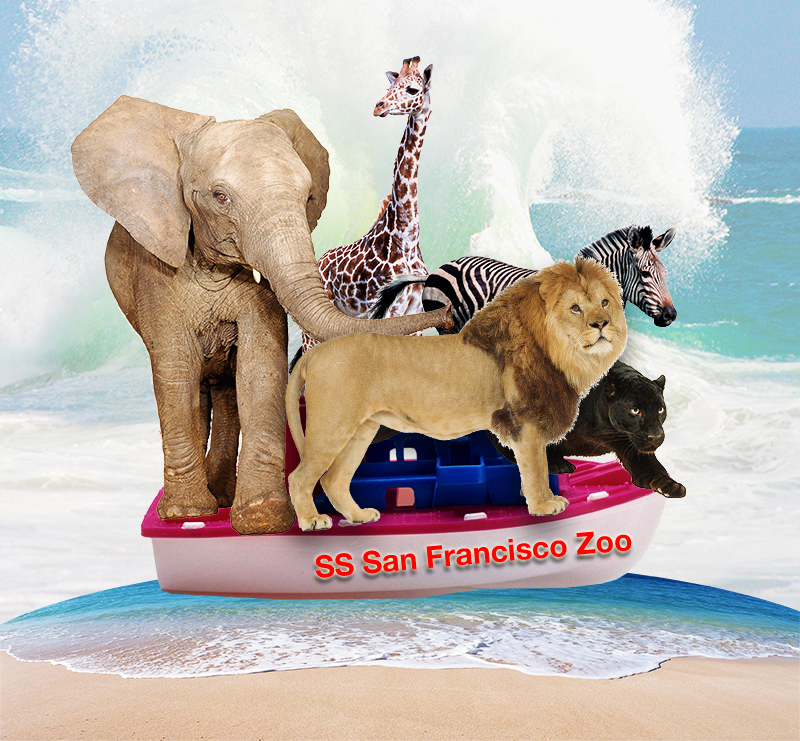
These are three necessary components of any product design: Knowledge: the background information that forms the foundation of product design Context: the ecosystem in which the product will be used Expectation: the alignment of goals between product creators and the users for which it was designed A failure to fully understand any of the above variables results in errors that propagate throughout the product system. But what if the product is disaster preparedness? Consider the design of an evacuation plan ahead of a disaster. You would need to understand the what kinds of damage the disaster is capable of wrecking; the probabilities for each outcome; the people and the ecosystem in which the disaster will occur; and expectations of all the participants in the evacuation plans. Tsunami and The Zoo A few years ago, I was teaching a fifth grade science class where we were discussing the possible damage from a tsunami in San Francisco (we just visited the Bay Model). The problem I posed to the students was to design a reasonable evacuation plan for The San Francisco Zoo animals. The Zoo lies on the tsunami flood plane, and as far as we knew there was no plan for…
Conceptual Design, Cultural Bias, Cultural Differences, Ethnographic & User Data, Pipsqueak Articles, Product Design Strategy
Trolls, Dolls, and Poupees
by Olga Werby •
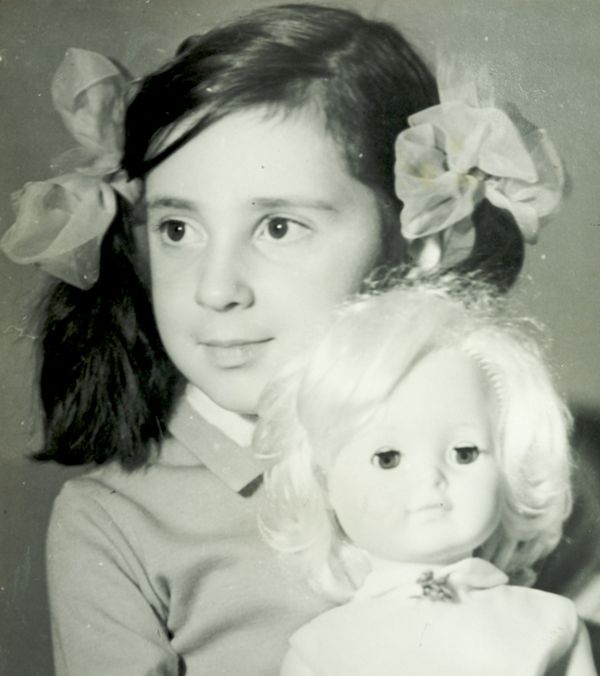
The first time I saw her, she was riding on a bus. Her hair was long and golden. Her eyes were amazing blue. She was stylishly dressed in a mini skirt and had a cool pair of earrings. But what got me—what burned that moment into my memory forever—was that her long slender legs bent without any visible joints. She was amazing. I wouldn’t see another like her until many years later, when my family was emigrating from Russia and living Vienna. Not far from the apartment we stayed in, there was a toy store and it was filled with wonders just like the one I remembered from so many buses ago: Barbie. When I was growing up in Russia, I played with dolls and poupees—all girls did. The dolls were made to resemble little kids, with big eyes, big heads, chubby cheeks, and cute clothes. I used old buttons and odd bits of cloth and lace to make them new clothes and bedding. My play mainly consisted of creating cool things for my dolls—I liked to sew and glue. And I don’t think that my play was all that much different from girls’ 100 years before—my dolls would have…