Tag Archive for politics

The Impact That Words Make

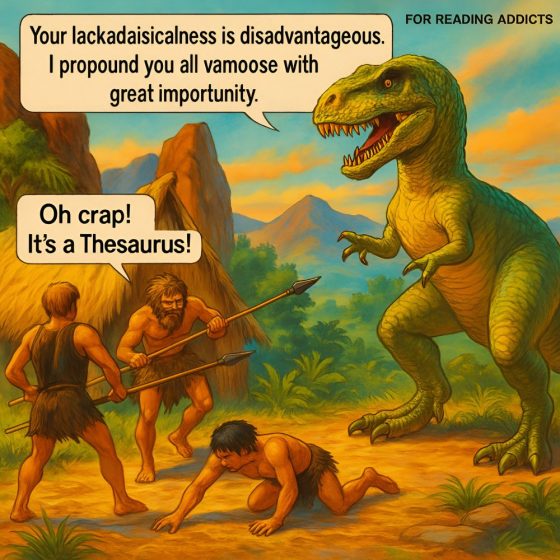
Your lackadaisicalness is disadvantageous.

Words help us remember. Words sharpen our senses and help us give shape and texture to everything we observe. Words have interesting sounds and mouth feel. The word “zebra” doesn’t only conjure up a striped ungulate, it pleasantly vibrates on our lips and tongue. It’s fun to say. The word “power” pushes out with force. It can even produce spittle. It’s aggressive. The word “emolument” is slippery, almost slimy. It feels like something unpleasant is rolling in our mouth. “Sun” doesn’t only describe our star, but it feels bright. “Onomatopoeia” is a mouthful, and it describes words that suggestively sound like the ideas they represent. “Bang” is both the sound that something makes and the word used to describe that sound. “Splat” is another example of a word that mimics the sound. And so is “buzzer” — another word that makes our teeth vibrate. Human languages are full of onomatopoeic words. In our household we use the word “pook” to refer to farts. It’s a Russian word, but easily understood and remembered by an English speaker. Consider what happens when you look at a series of images. As they are flashed on the screen, you don’t need language to identify…

Not So Random Musings

Paper Birds

I’m overdue for an update. Usually, I have ideas and themes all worked out (and ebook giveaways all set), but this time it’s different. I still have books to give out, but the main theme of this “sharing” eludes me. So I’m going to write about a few issues that I found interesting in my last month of reading, editing, and watching the news. Reading Last year, I finally bit the bullet and started reading Robert Jordan’s “The Wheel of Time” series. I’m on book 11 now… Robert Jordan (this is a pen name of James Oliver Rigney Jr.) began writing the first book in these series, “The Eye of The World” in 1984 and only published it 1990. Considering just how popular and influential these series were/are, it gives hope for writers like me… I love the world created in these books. It’s very complex and deep (and wide). But I kept finding similarities to other fantasy series I’ve read. Of course, there’s the homage to Tolkien’s “Lord of the Rings” series. But I expected that — those were really the founding high fantasy series that gave birth to all the rest. But there was also more than a…

Social Media Election

SOCIAL-MEDIA-ELECTION_Featured_Image

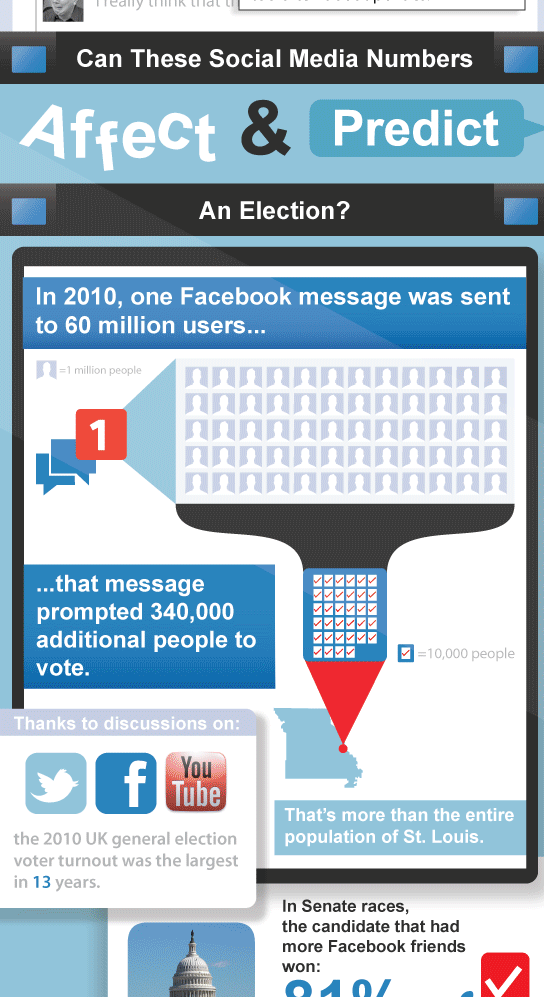
The creative folks at Open-Site.org invited me to share the following informational graphic with the readers of this blog. Anyone with a Facebook or Twitter account has probably noticed an increase in the number of political postings over the past few years. This is due, in part, to the explosive rise in social media outlets and users. But voters are not the only people who use social media; among politicians, 9 out of 10 Senators and Representatives have Twitter accounts. However, many are starting to wonder if social media is becoming less a reporter of political races and more of a predictor of the results. In Senate races, the candidate with more Facebook friends than his or her opponent has won 81% of the time. And one email sent to 60 million Facebook users prompted an additional 340,000 people to vote in the 2010 election. This infographic illustrates just how politics and social media are affecting each other.

Before you cast that vote on the ballot this November…

Article: McGrath, M (2008). “Political views ‘all in the mind’.” BBC World Service. Visited on 18 September 2008 http://news.bbc.co.uk/2/hi/science/nature/7623256.stm Conceptual Design —  to investigate the level of connection between a person’s political views and her/his physiological makeup, e.g. that person’s sensitivity to fear or threat. Interaction Design — small study targeting potential voters, exposing them to various sights & sounds that may provoke fear, and checking their responses against their political views on multiple issues.  Subjects were first asked a series of questions regarding their political views on multiple issues (like gun control, capital punishment, abortion, etc.).  Then, using electrical conductance to measure subjects’ skin & blink responses, they were exposed to a series of intentionally frightful images & sounds.  This is used to determine their levels of sensitivity to fears & threats Interface Design — creepy images like a scared man with a tarantula on his face, and an open wound with maggots in it, and loud, unexpectedly intrusive noises Summary — while this study is geographically limited (conducted only in Nebraska) and statistically insignificant (n=46), it does offer an interesting hypothesis that people who are highly sensitive to threats & fears tend to support a right-wing agenda. From…