Tag Archive for emotional reaction

Decision Scaffolding and Crisis Mapping

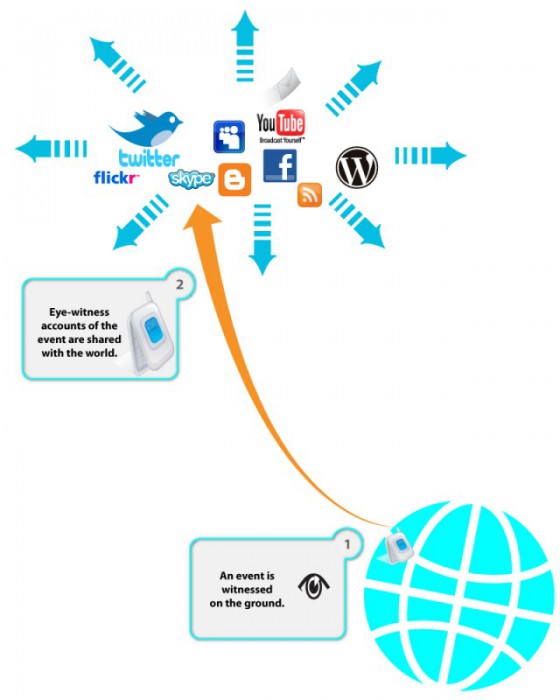
I’m working on a series of illustrations to highlight the need for decision scaffolding during an aide mission. The ideas are based on the Ushahidi deployment experience in Haiti after the 2009 earthquake. But the idea is to make this more general. I would love ideas and recommendations on how to make this visualization better and more communicative. (read more about crisis mapping here) Crisis: Smoke Signals from Eye-Witnesses Let’s start with a crisis—a natural disaster or a political upheaval leaves thousands of people in desperate need of help. The people on the ground witness the suffering and use ICT (Information Communication Technology) to send up the spoke signals. Please not that Internet services might be compromised (due to deliberate actions taken by the authorities; infrastructure failures; chaotic conditions on the ground), but people tend to be very creative and use phone lines, radios, satellite links, and just person to person communication to get the information out there. During the current Libyan crisis, people were very creative: “To avoid detection by Libyan secret police, who monitor Facebook and Twitter, Mahmoudi, the leader of the Ekhtalef (“Difference”) Movement, used what’s considered the Match.com of the Middle East to send coded love…

Bullying in a Workplace

On Valentine’s Day, February 14 2011, New York Times ran an article “Web of Popularity, Achieved by Bullying” by Tara Parker-Pope—recent research shows interesting patterns in bullying and victimhood distribution in the school student body. As I was reading the article, I realized that much of what is being described there had a direct parallel in a workplace. I don’t have the data to back this up, but I had personal experiences giving me some anecdotal evidence. Perhaps you have had similar experiences as well (academia is ripe with them). To make my point I’ll quote part of the article below and use bold on text that I’ve replaced in the article: students to co-workers; student body to employees, and so on. Enjoy! Web of Popularity, Achieved by Bullying By TARA PARKER-POPE For many employees navigating the social challenges of a workplace, the ultimate goal is to become part of the “popular” crowd. But new research suggests that the road to workplace popularity can be treacherous, and that employees near the top of the social hierarchy are often both perpetrators and victims of aggressive behavior involving their peers. The latest findings, being published this month in The American Sociological Review,…

The Value of Trust in Search

There was an interesting article published on the New York Times the other day: “The Dirty Little Secrets of Search.” The article documented the use of Black Hat SEO strategies on behalf of J. C. Penny, leading J. C. Penny to be at the top of multiple Google search results for months. While J. C. Penny didn’t disclose the boost in revenues that the number one placement on Google search produced during the 2010 Christmas shopping season, we can assume it was substantial. The article raises several alarms: How prevalent is the use of “Black Hat” CEO techniques among large commercial companies selling their services online? Since J. C. Penny is a customer worth several million of ad dollars to Google, did Google (for a time) look the other way? [30-11-2010, BBC News: “EU launches antitrust probe into alleged Google abuses,” last visited on 02-14-2011.] Google administers “Google Hell” punishment to the companies that use “Black Hat” strategies to beat its search ranking algorithms. There’s no court, no arbitration, no negotiation. The company simply vanishes from Google search results. These are all about trust. We—the average online citizens—rely on search results for so many needs now. We research our medical…

Thinking About Value

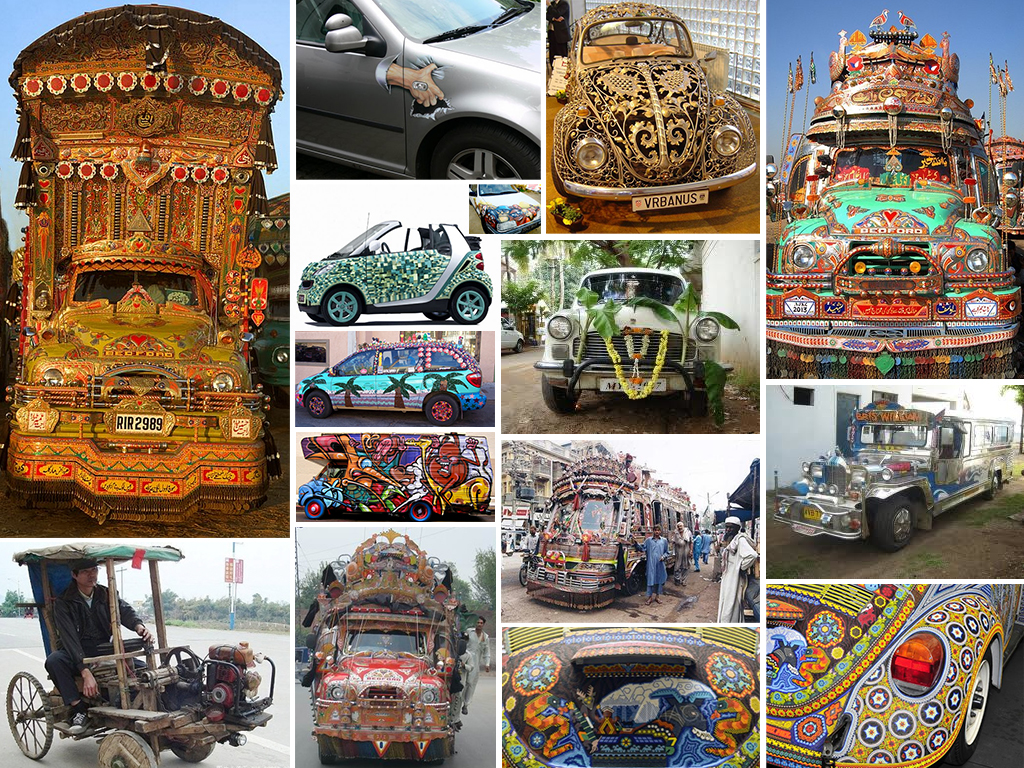
Which car do you find more pleasing? Which car would evoke a feeling of envy? Would you shake your head or starting thinking of how you can improve on the looks of your car? Which car’s origin would you place in the South Asia? Which in South America? Which owner cares about the aerodynamic qualities of the vehicle? Regardless of your personal feelings, the owners of these automobiles have clearly invested a tremendous amount of energy and effort into making them look like this and are very proud of the results! Telling a Story Each of the vehicles above tells a story about its owner and about its culture. The story conveys information: the owner’s goals for the car: utility or status symbol or both cultural value of design cultural symbols owner’s attitude towards possessions (e.g.: How long is the car expected to stay with one owner?) owner’s place in the social hierarchy owner’s unique identity owner’s investment into the vehicle (e.g.: time, money, skill, etc.) the perceived value of the vehicle to its owner These stories of cars and their owners change from culture to culture, from place to place, and of course in time. What we consider beautiful…

Cultural Differences or Child Abuse?

Sometimes, it’s in the eye of the beholder. Consider the images below: Is this child being physically tortured? The little girl is the photo is about 5 or so. The temperature of the air around her seems to be about the same: 5 F°. The temperature of the water is below freezing. The child is freaking out and is in serious danger of hyperthermia. So how do we judge the adults in this photo? The winter-coated men dunking the girl into the ice-cold water think they are doing good by this child! This is the right of Epiphany–a religious act meant to help the girl. How do we evaluate the social value of such act from the comfort and warmth of our computer lit rooms? How do you feel about this photo? If you’re not sure yet, follow this link: http://video.mail.ru/mail/mimozachina/2688/2690.html My personal feeling is that if zoo keepers saw this kind of behavior in the primate house, the baby ape would have been taken away due to its mother’s lack of parenting skills. But then again, I’m just imposing my cultural views and norms on someone else…or am I? The Call of Mother Tigers, Mother Grizzlies, Mother Dolphins… There…

Toilet Games

If you have small children…boys, you are undoubtably familiar with things like: “My Wee Friend”; “Piddlers Toilet Targets for Potty Training”; “Potty Training Targets – Look like real targets!”; “Tinkle Targets for Boys”; “Wee Wee Pals”; or “On Target Infant Toilet Training Balls” from Amazon. Problem: boys have to learn to aim; boys attention span is shorter than the time it takes to empty their bladder; Solution: make going to the bathroom fun; design an activity that extends the attention and improves aim; The conceptual design is pretty straightforward: align the goals of the parents (teaching bathroom skills) with the goals of a toddler (have fun) to improve the toilet experience for all concern–basic goal alignment! Unfortunately, the problem doesn’t seem to go away as these boys grow up. Product design to the rescue! The Urinal Lips design uses the same product design strategy: make aiming fun! What sign on the walls of the bar’s men’s room couldn’t achieve, a playful design did–these men’s room stay clean. One Step Farther… While attention controls might lag during a long bathroom break, video games seem to have a tighter control over attention. So welcome to the future of urinals: These are the…