

How does one design a successful ad? That depends on the culture at which the ad is aimed. Here are a few example of ketchup ads. Spot the one NOT aimed at an American audience!
Posts written by Olga Werby or Christopher Werby
How does one design a successful ad? That depends on the culture at which the ad is aimed. Here are a few example of ketchup ads. Spot the one NOT aimed at an American audience!

I just returned from a brief visit to The Hague and Amsterdam. When in a foreign country encountering an unfamiliar language, it’s easy to focus on the visual presentation of content since the linguistic portion of the presentation is unavailable for processing. People who can read can’t help but do so when presented with text. But when one can’t process the linguistic content, all that is left are visual clues (and smells and sounds…). So I took a few snapshots to show how the tone of the interface impacts the emotional processing of content and attitude of the customer to the content. Selling Cheese in Amsterdam This is a farmers’ market stall in the middle of Amsterdam, selling home-made cheese. The woman in the photo is the actual cheese maker. Note the hand-lettered signs, the simple wooden boxes, the plain presentation — the overall effect is home made goods, care in production, quality product, even made with love. Fancy production values would just be off putting in this context, and probably result in lower sales of cheese. This NOT a museum, but rather a neighborhood cheese store in Amsterdam. (It is located next door to the flower museum…). What is…

I get a lot of email forwards…don’t we all? And just the other day I got one that I have seen many times already over the past few years… Usually, you look, you smirk, you move on. But this time, the photo got me thinking: that poor kid — he has no memory of this shot, but he will be remembered for it for the rest of his life! The shot has long ago slipped from the close circle of sharing that his parents intended it for and has been widely distributed through out the world. Someday, this kid might even get it as mail forward himself: an adult man looking at a silly embarrassing moment that got away… Information with Expiration Date Somehow, I don’t imagine that getting “an image that got away” of oneself would be a source of continuous pleasure. One might want to forget the whole thing… And it is not just images — although having images with expiration dates would be very valuable — there are loads of information that should be forgotten by design. When my generation was growing up, the silly and stupid things we did didn’t end up as data for public…
We have to work within the boundaries of what’s possible given the history of the social system, the constraints of technology, the limitations of budgets, and cultural limits of the society wich endevers to implement the socio-technical system.

We view the world through our own personal and cultural filter. We can’t help but do that. But put us in another cultural frame or time period, and we might be horrified at what we might witness. Consider this image: This baby is only two months old. And the people about to dip him into the freezing waters of St. Petersburg’s lake are his parents. I’ve been to this lake. I saw my own dad do the dip. He was a grown man at the time, and I still thought it was crazy. In Russia, the folksy wisdom is that such dips are good for you. But here, in U.S., the parents would be arrested, their son taken away by child protective services… It’s all relative! And here’s a few examples: /blog/2011/01/cultural-differences-or-child-abuse/
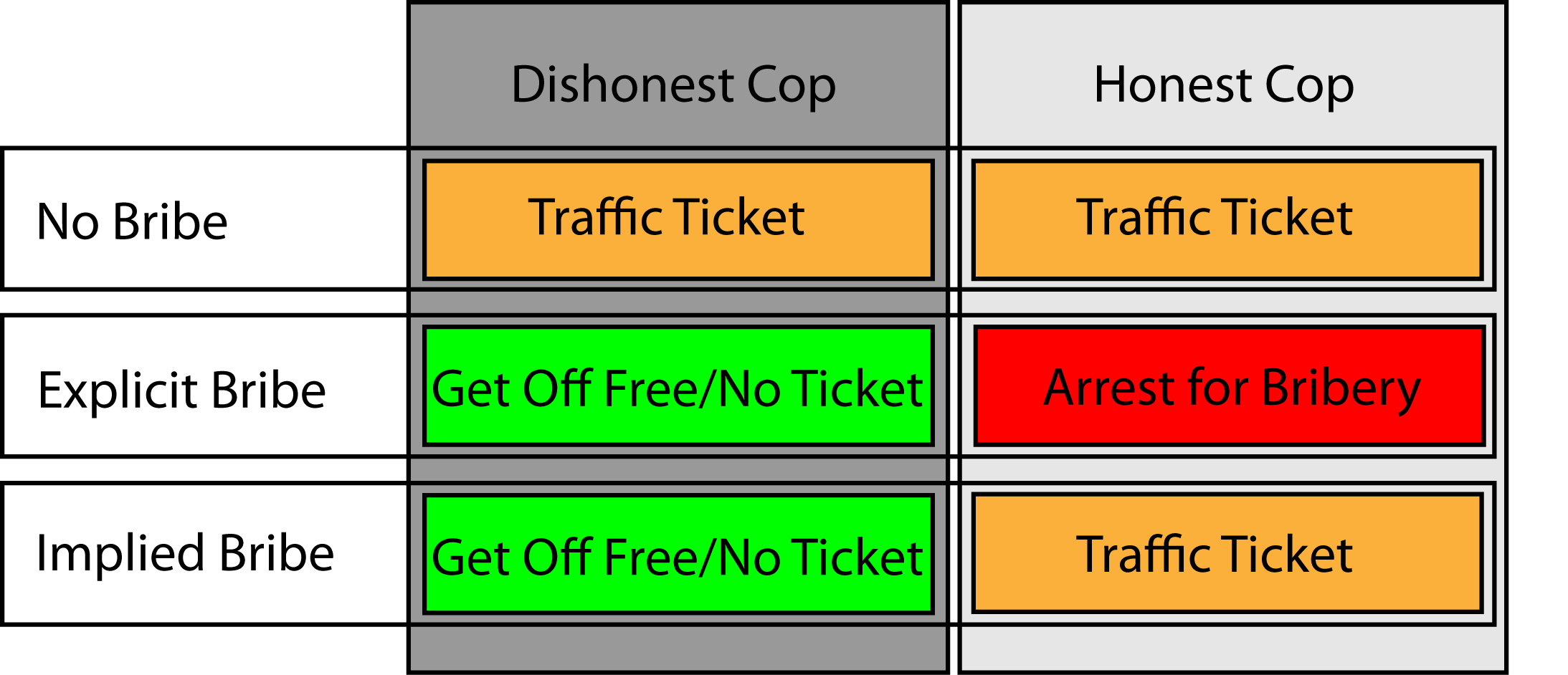
In his book “The Stuff of Thought: Language as a Window into Human Nature”, Steven Pinker gave the following defense of language ambiguity: Imagine you are stopped by a traffic cop for a violation. You would rather not get a ticket, and consider offering the cop a bribe. You have options: no bribe and definitely get the ticket; try a bribe and hopefully the cop will accept and let you go free this time. But what if the cop is an honest cop and doesn’t accept bribes? Then you just bought yourself a trip to jail for bribing an officer! That’s the worst possible outcome — a traffic ticket is better than a trip to jail AND a traffic ticket. But what if you just “sort of” offer the officer a bribe? Wave a wad of cash without actually offering it to the officer? A dishonest cop might take you up on the offer and let you go without a ticket. An honest cop could ignore the whole cash waving and write a ticket; or he could ask for clarification: “Are you trying to bribe me?” “On, no, officer. Of course not!” And you are left with a traffic ticket…