Pipsqueak Articles

Posts written by Olga Werby or Christopher Werby

Mathematical Landscapes Of My Childhood And Their Loss

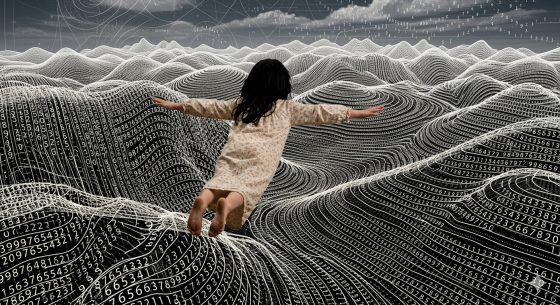
Mathematical landscape with girl flying over it

When I was a kid, I slept in my grandparents’ bedroom. First in a crib, then on a little couch in the corner of their room. My grandfather taught me math every night before I fell asleep. He drilled me on addition, subtraction, then multiplication. He used large numbers; and I always got the right answer. It was easy for me. Numbers formed a complex landscape that I could fly over. In the darkness, my grandfather would rattle out a problem — 337 + 781, for example — and I would fly over the beautiful hills and valleys until the answer would be right there. I loved that game. I then I would try to fall asleep really fast because my grandfather snored so loudly that if I didn’t I would never be able to due to the horrific noise. We played that game for years, until I was displaced from my grandparents’ room by my younger sister. I am currently reading a popular book on neurology, “The Man Who Tasted Words: A Neurologist Explores the Strange and Startling World of Our Senses” by Dr. Guy Leschziner. It explores many human variations in sensory perception either from birth or as…
Natural Selection of Manmade Objects

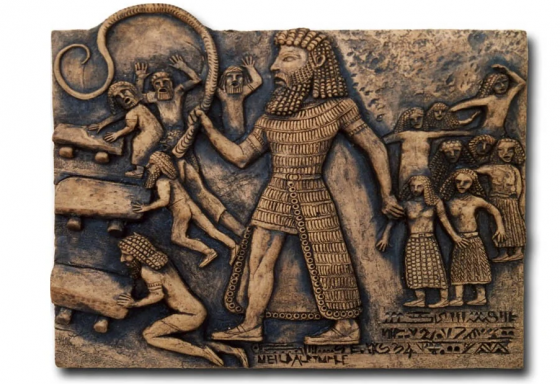
Gilgamesh

Can natural selection and evolution work on man-made objects and structures? Can it work on the stories we tell ourselves as a society? Products, architecture, and stories are continually evolving and selecting for traits that we and our influencers find more useful and appealing. Unfortunately, lots of interesting designs and solutions get overlooked along the way. Like evolution, luck is a major component of the force that decides what stays and what goes.

Generational Wealth in the Animal Kingdom

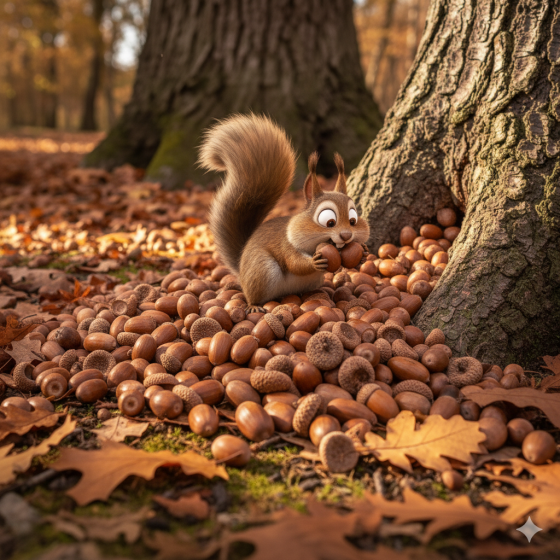
AI-squirrel with acorns

What other species of animals accumulate wealth over several generations? The other day, my husband and I were watching birds and squirrels dig around in our garden. “They are just trying to make a living,” my husband said. And it got me thinking — squirrels and birds have to find food and shelter everyday to survive. If they don’t find food, they go hungry. If they don’t find shelter, they suffer the elements and predators. Humans used to live the same day-to-day existence in our distant past. But now, we work hard to pass on the fruits of our labor to the next generation. But are there other animals that do the same? The largest known colony of ants is Linepithema humile, the Argentine ant. It has a contiguous colony from Northern Italy to South of France to the coast of the Atlantic in Spain — about 3,700 miles. It’s been around in Europe for about eighty years and is believed to have started in South America some 100 years ago. If there’s power in numbers and years, these 2 millimeter ants have it is spades. [https://www.guinnessworldrecords.com/world-records/largest-colony-of-ants] The largest colony of termites, another social insect, is over four thousand years…

We Are The Heroes

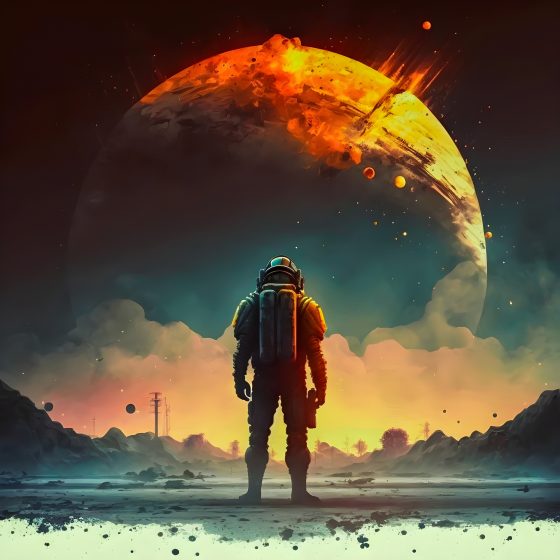
scifi hero

We are the heroes of our own journey through life. That’s true whether or not we are basically good. No matter what kind of actions they took, Hitler, Putin, Jack the Ripper, or the Unabomber always viewed those actions as heroic nationalist, political, or social necessities done for the glory of “their” people. Their life choices were, in their minds, necessities of the moment. Even if people died, it was for the greater good.

Epigenetics of the Soul

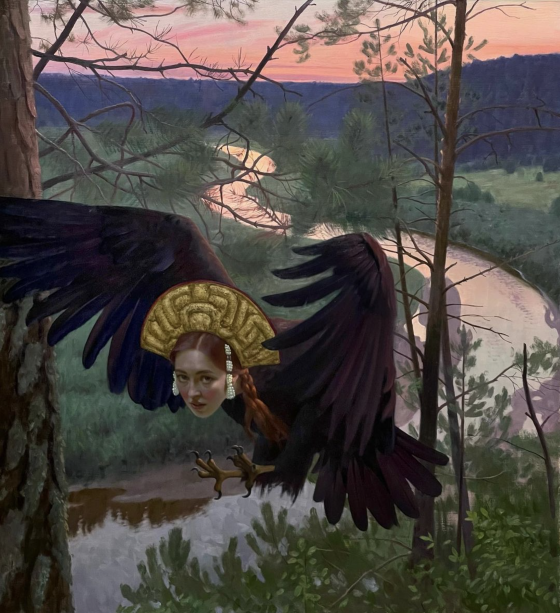
Flying Raven Witch by Sergei Chudanov

I know I’m being provocative with the title. Epigenetics is the study of the influence of environment on the expression of our genes. Epi is the Greek word for ON or ABOVE. And I am using soul to designate the essence of who we truly are. Thus I want talk about the environmental conditions that shape up, that makes us into us. If I was born into a different economic, cultural, or/and social situation, would I still be me? Or would I be some different version of me?

Human Limitations

Giraffe-sized Asteroid

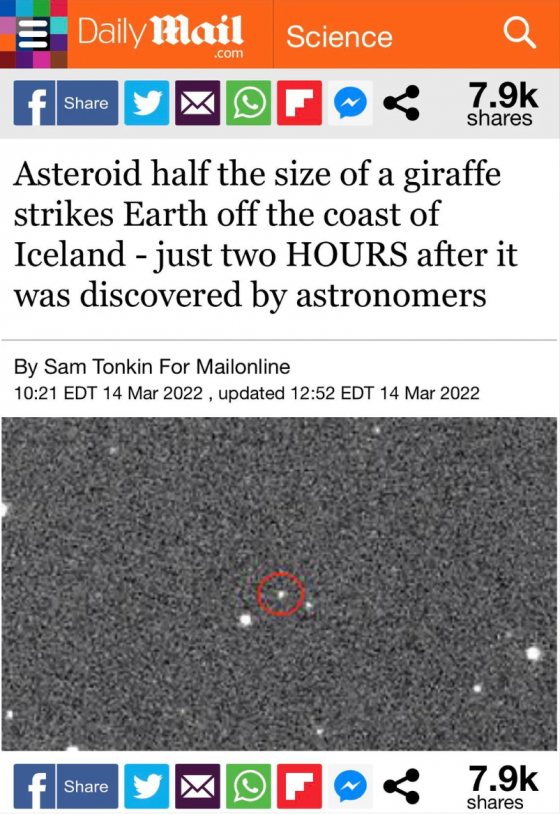
We live in a vast universe that spans enormous scapes of time and space. But humans evolved to understand information in relatable quantities at a human scale. We conceive landscapes mostly in chunks we can easily walk, connected loosely by strands of distances we can comfortably drive. We live in the now, but relate to the future in terms of a past that we dimly remember. We can make plans just within a very narrow scope of time — days, perhaps weeks. The future is always elusive and vague. We don’t comprehend spans of time outside of our experience. The span of a million years, ten million, a hundred million, or even just a thousand are concepts which we can intellectualize about but can’t really feel. Even in our interactions as members of a species, we can each just maintain a web of a few dozen relationships. Space, time, and human interactions are limited for us. We don’t process and, thus, don’t truly comprehend, information of large or very small scales that are beyond our direct experience. It’s not who we are as humans. This has all sorts of ramifications beyond the obvious. It’s why it’s easy for us to…

Extravagant

Free Science Fiction

The Latin root of the word extravagant means “to wander outside or beyond.” Clearly the meaning changed somewhat over the years, but wandering in unfamiliar places exposes our senses, and thus our brains, to new experiences. Our senses are hit with novel sights, sounds, and scents. We are getting something “extra” out of life when we venture beyond the familiar. I remember the first time I travelled to a tropical destination. The aroma, as I stepped out of the airport, was overwhelming; it was almost a physical wall of fragrance. There was no doubt that I was entering some place new. Novel sensual experiences impact how we think and remember, putting on a new track our normal train of thoughts. Wandering the world creates wonder. Changing our perspective in this way is a main reason to seek out new experiences. When we think, we don’t do so in isolation. Our minds are not soaring and thinking up ideas in an empty space. We think with our bodies and senses as much or more than we do with our minds. The sensory inputs we get as we move, work, and problem solve, feed us information and clues as to what to…