Tag Archive for emotional tone

The Impact That Words Make

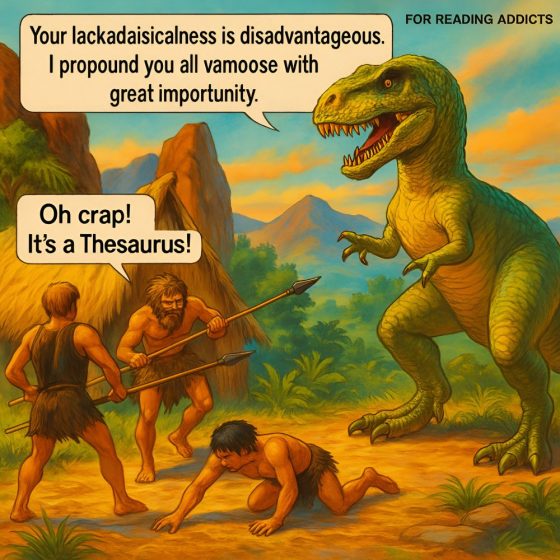
Your lackadaisicalness is disadvantageous.

Words help us remember. Words sharpen our senses and help us give shape and texture to everything we observe. Words have interesting sounds and mouth feel. The word “zebra” doesn’t only conjure up a striped ungulate, it pleasantly vibrates on our lips and tongue. It’s fun to say. The word “power” pushes out with force. It can even produce spittle. It’s aggressive. The word “emolument” is slippery, almost slimy. It feels like something unpleasant is rolling in our mouth. “Sun” doesn’t only describe our star, but it feels bright. “Onomatopoeia” is a mouthful, and it describes words that suggestively sound like the ideas they represent. “Bang” is both the sound that something makes and the word used to describe that sound. “Splat” is another example of a word that mimics the sound. And so is “buzzer” — another word that makes our teeth vibrate. Human languages are full of onomatopoeic words. In our household we use the word “pook” to refer to farts. It’s a Russian word, but easily understood and remembered by an English speaker. Consider what happens when you look at a series of images. As they are flashed on the screen, you don’t need language to identify…
Special Preview: Affective Computing

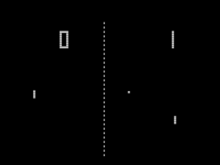
Pong Interface

Some 25 years ago, I came up with tiny application: each day, a person picks a color that represents his or her predominant emotional state; the collection of color moods are mapped onto a calendar and displayed as an animated film, summarizing the emotional life of person. It was simple and easy and very effective. And in some way, this was also part of the affective computing — computers that use emotion as part of HCI. [Note: This could and was done with watercolors as flip book some 40 years ago when I played in my art class in school.] Affective Computing, I feel, is only recently became part of the “vocabulary” of computer-based developers. When I first started working in this field, graphics were non-existent, thus Pong. In the early nineties, my business partner and I met with the president of Organic, a web design firm in San Francisco, who promptly informed us that his business had no need for Interaction or Interface Designers, that’s what graphic artists were for. Now, psychologists, sociologists, and sociologists are routinely hired by creative firms to help solve design problems. Times change! There are a lot of posts on emotional design on this…