
Monthly Archives: December 2011

Cultural Differences through Time

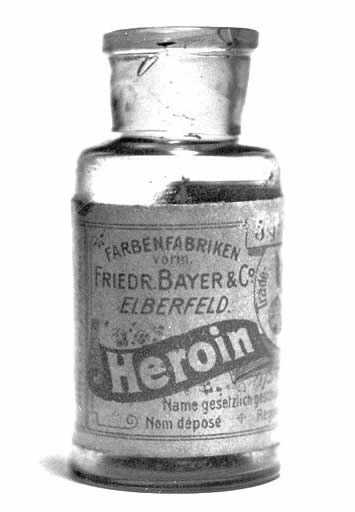
Bottle of Heroin (1890-1910) by Bayer, sold as a non-addictive substitute for morphine

There’s been a shift in our culture (at least in US) towards seeing medication as a sign of weakness from one of alleviation of suffering that predominated out society some 100 years ago. Some people I know are even proud of the fact that they’ve never taken a painkiller or were treated for cough. Stoicism became a virtue all in itself — “I’m a good person because I don’t take medicine, preferring to suffer the illness and/or the symptoms of the disease.” And it’s not just the patients that feel this way. Medical professionals routinely prescribe to the “complain 3 times” rule: their patients have to mention being in pain on multiple visits prior to getting a prescription that would deal with it. A friend told a story of a doctor visit during which he was told that “he didn’t want to appear to be complainer.” Several weeks later, he was having back surgery and remains in a wheelchair to this day, a decade later! How did we get here? This is a very complicated question, but it might help to examine how things use to be. Below are medications as they were packaged and sold all over America in the…

Creativity, Perception, and Public Art

Coming Unzipped

Art or craft? Creativity or public nuisance? Sometimes, the line between these is so fine, so complex, so fractal, that it’s simply doesn’t matter. The images below span thousands of years in dates of creation. The artists used light and shadow, perspective, and clever geometry of space to add meaning to their work. All showed an amazing amount of imagination, all provide commentary on current events or a point of view. Happy holidays to all! Enjoy! [flagallery gid=3 name=”Gallery”]

Special Preview: Philosophy of Interaction and User Experience

A person uses a piece of software, a Web site, or any other product — “virtual” or “real” — to achieve a goal. The design of interaction with these products can either help or form obstacles that interfere with the realization of that goal. A product is easier to use when its interaction is designed to meet the needs of its intended audience. Product designers who consider those needs produce far more effective interaction solutions than those who base their designs on aesthetics or business needs alone. But how does one go about “considering” user needs and then come up with a design solution that works? Oscar Wilde famously said: The pure and simple truth is rarely pure and never simple. Pure and Simple design is similarly rarely pure and never simple to develop. I my class, Cognitive tools for Product Designers, we explore what users bring to usability. We all arrive at the scene with different baggage — our experiences, education, perception, memory, and so on are unique to each of us. No two individuals interpret an experience in exactly the same way. While this sounds daunting, we shouldn’t give up on design all together. We all have some…