
Keim, B., (2010). “Sense of Touch Shapes Snap Judgments.” Wired.com. Visited on October 3, 2010: http://www.wired.com/wiredscience/2010/06/touching-cognition/ Brandon Keim’s article for Wired.com’s science blog provides a brief overview of recent research into the role that tactile sensations play in human interactions. This new area of psychological research, referred to as Embodied Cognition, could potentially have a significant impact on how we understand social and physical interactions. Put simply, the core findings of the research show that our physical responses to our immediate environment, combined with other factors, can directly and measurably influence our decision-making. One of the examples provided involved giving the subject a heavy clipboard to hold during the experiment; when holding the heavy clipboard, the subjects tended to regard their own opinions and problems presented to them as being more weighty and serious in nature. Other examples showed how a tactile interaction with a rough surface prior to an interview could lead to a harsher attitude towards the interviewee. The article itself is somewhat of a stub, so we are left to imagine the further implications of Embodied Cognition ourselves. What relevance does Embodied Cognition have for product interaction design? After all, it’s not as if touch has previously…
Monthly Archives: October 2010
Conceptual Design, Contributor, Cultural Differences, Interaction Design, Interface Design
Antisocial Networking?
by Roman Shumikhin •
Stout, H. (2010). “Antisocial Networking?” New York Times Online. Retrieved on 3 October, 2010: http://www.nytimes.com/2010/05/02/fashion/02BEST.html The main topic of this article is that technology may be changing the very nature of kid’s friendships. Children used to actually talk to their friends. But now, even chatting on cellphones or via e-mail is becoming rare. Today’s teenagers and preteens, prefer to make friends and communicate using cellphone texts and instant messages, or through the very public forum of Facebook walls and MySpace bulletins. People now are more likely to use their cellphones to text friends than to call them. The article shows two opposite points of view on the topic. The author believes the quality of human interactions is becoming worse without the intimacy and emotional component of regular face-to-face communications (hence the title of this article). The ease of electronic communication may be making teens less interested in face-to-face communication with their friends, but close childhood friendships help kids build trust in people outside their families, develop empathy, understand emotional nuances and read social cues like facial expressions and body language, and consequently help lay the groundwork for healthy adult relationships. On the other hand, online social networking allows children to become…
Conceptual Design, Contributor, Interface Design, Language, Product Design Strategy, Users
Using Menu Psychology to Entice Diners
by Mallika •
Kershaw, S., (2009). “Using Menu Psychology to Entice Diners.” New York Times Online. Visited on October 02, 2010: http://www.nytimes.com/2009/12/23/dining/23menus.html. This article discusses how an understanding of human psychology is being applied to sculpt a restaurant menu into a lucrative tool for the restaurateur. Restaurateurs play down the importance of the cost figure by eliminating the dollar sign and decimals. Adding a personal touch to an item (‘Grandma Mary’s cake’) or a descriptive menu label (‘buttery pasta’) draws more attention to the dish. Other decoys include using a description that glorifies a more profitable dish compared to others. During the tough economic times in the last year, some restaurants were reinventing their restaurants through such menu design techniques, and were hoping that would make the difference they needed. Conceptual design: When you go to a restaurant, good food is not the only thing you seek; you are looking for a good experience. Of course sometimes, great food can make us turn a blind eye to any other inadequacy and draw us back into the restaurant. Nevertheless, a good experience overall manifests itself as a stronger loyalty. If your overall experience has made a lasting positive impression, you may recommend the restaurant…
Anchoring Errors, Background Knowledge, Background Knowledge Errors, Causal Net Problems, Diagnostic Errors, Featured, Mental Model Traps, Metaphor Mistakes, Misapplication of Problem Solving Strategies, Pipsqueak Articles, Product Design Strategy, Scaffolding
What is a p-prim?
by Olga Werby •
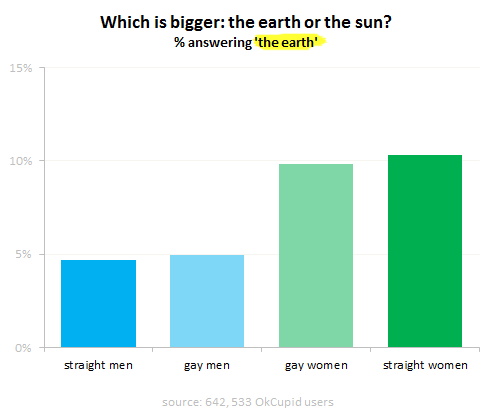
I’ve been using the p-prim ever since I’ve learned of them, back in my graduate school days at UC Berkeley. P-prims stand for phenomenological primitives and were “invented” by Andrea diSeesa, a UC Berkeley professor in the School of Education who also happens to be a physicist (diSessa, 1983). Visit his Wikipedia page and check out some of the cool projects he’s working at now. Before I give a definition of a p-prim, I think it would be good to give a few examples. Here’s a graph published by OkTrends on beliefs of various groups (in this case as defined by their sexual orientation) about the relative size of our sun versus the Earth (our planet). Even disregarding the differences in percentages due to sexual preference, an awesome 5 % to 10 % of our population believes that the planet we live on is larger than the star it orbits. Would this qualify as a p-prim? Yes: it’s not a formally learned concept; it describes a phenomenon; it’s a bit of knowledge based on personal observations: the sun looks like a small round disk in the sky; it’s a useful problem-solving tool when one has to draw a picture with…
Ethnographic & User Data, Featured, Interface Design, Pipsqueak Articles, Product Design Strategy
Emotional Design
by Olga Werby •
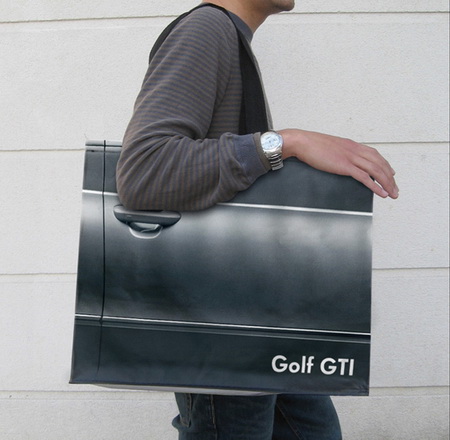
Product design is not just about usability. How we feel about a product makes a lot of difference. The research shows that two identical applications—with similar failure rate, but with a different take on dialogue box writing—result in very different perceptions of usability by its audience. The application with polite dialogue text always wins. Emotional design deals with how we feel about the product. Interfaces design is all about the look and feel and is responsible for a large portion of generated user emotions. Here are some examples of bag designs. If you want to encourage recycling, this is a great way of making these bags valuable—the users won’t throw them out after one use. Enjoy!
Errors, Ethnographic & User Data, Interface Design, Perception, Pipsqueak Articles, Product Design Strategy, Scaffolding, Users
Accidentally Supergluing an Eye Shut
by Olga Werby •

I hope the mere reading of the title made you queasy—it makes me shudder every time. On October 6th, CNN posted a story about a woman from Phoenix, Arizona, who accidentally put drops of super glue into her eye instead of the eye medication. She called 911, and in the emergency room the doctors had to cut open her eye and peel the hardened layer of super glue from her eye ball. If this doesn’t make you sick, then… One may ask: how stupid does one have to be to glue their eye shut? But, as with many other product-use errors, the woman made a very common mistake. The hospital wasn’t surprised—apparently these accidents happen all the time. Because of poor vision, she couldn’t distinguish between the bottles of her eye medicine and the package of super glue. Take a look at this: If you are relying purely on feel, the woman’s error no longer feels so outlandish. Here’s what she probably could see with her poor vision: And here is what we, the well-sighted, could see: So upon a close examination, the woman’s error is a natural mistake. (Yeah, I know, I know: Why would she keep the bottle…
Attention Controls Errors, Cognitive Blindness, Conceptual Design, Featured, Interaction Design, Mode Errors, Pipsqueak Articles, Users
Skin-deep Usability
by Olga Werby •
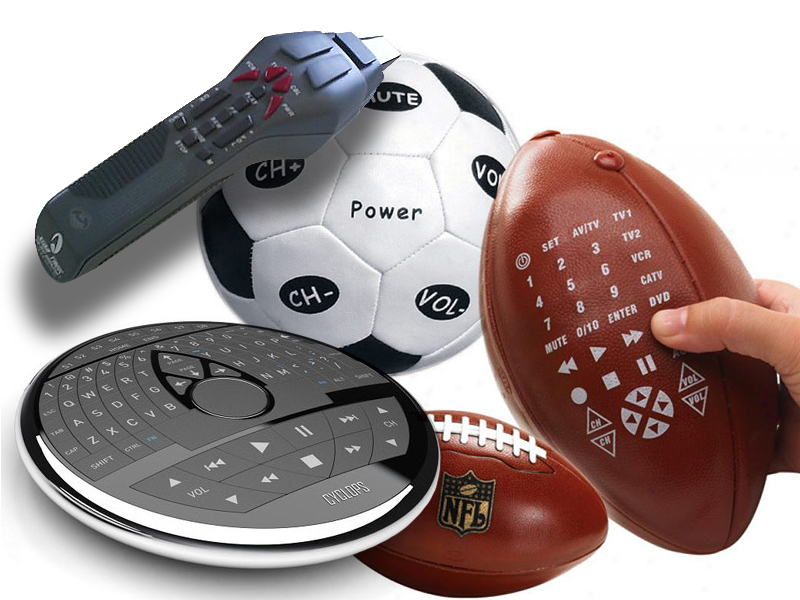
The Universal Remote Control Story A few years ago, we got a Star Trek phaser universal remote control as a gag gift for the holidays. As any universal remote control (URC), it was supposed to control any and all devices that were hooked up to our TV and do it with a flair of shooting a phaser at the general direction of our equipment. A few days later, it was relegated to our sons’ toy box, and now I wouldn’t even know where to look for the thing. Big buttons, footballs, phasers, UFOs, futuristic control centers—the makers of universal remote controls have tried them all. But consumers still buy one URC after another in the hope of finding something that would work for them. Why are these things so darn hard to use? Manufacturers seem to believe that by giving their products a friendly, toy-like appearances, these devices would seem more user-friendly and easier to use. But, personally, I don’t want a giant ball in middle of my kitchen table or rolling around my living room floor. I don’t want the kids to toss footballs to control the channels or fire phasers to lower the sound. I just want something…