Tag Archive for ebook

Mathematical Landscapes Of My Childhood And Their Loss

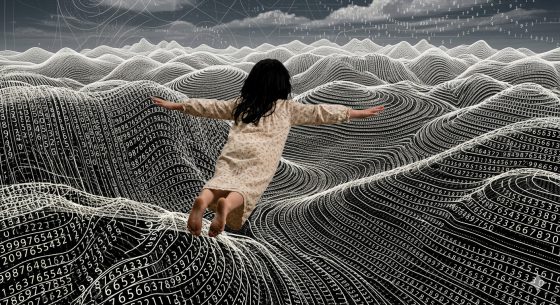
Mathematical landscape with girl flying over it

When I was a kid, I slept in my grandparents’ bedroom. First in a crib, then on a little couch in the corner of their room. My grandfather taught me math every night before I fell asleep. He drilled me on addition, subtraction, then multiplication. He used large numbers; and I always got the right answer. It was easy for me. Numbers formed a complex landscape that I could fly over. In the darkness, my grandfather would rattle out a problem — 337 + 781, for example — and I would fly over the beautiful hills and valleys until the answer would be right there. I loved that game. I then I would try to fall asleep really fast because my grandfather snored so loudly that if I didn’t I would never be able to due to the horrific noise. We played that game for years, until I was displaced from my grandparents’ room by my younger sister. I am currently reading a popular book on neurology, “The Man Who Tasted Words: A Neurologist Explores the Strange and Startling World of Our Senses” by Dr. Guy Leschziner. It explores many human variations in sensory perception either from birth or as…
We Are The Heroes

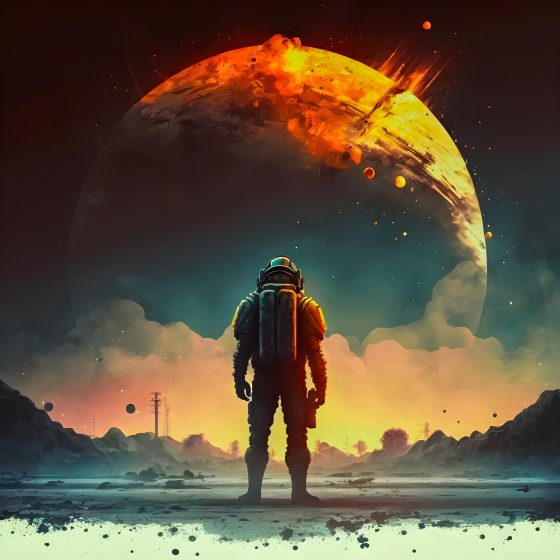
scifi hero

We are the heroes of our own journey through life. That’s true whether or not we are basically good. No matter what kind of actions they took, Hitler, Putin, Jack the Ripper, or the Unabomber always viewed those actions as heroic nationalist, political, or social necessities done for the glory of “their” people. Their life choices were, in their minds, necessities of the moment. Even if people died, it was for the greater good.

Extravagant

Free Science Fiction

The Latin root of the word extravagant means “to wander outside or beyond.” Clearly the meaning changed somewhat over the years, but wandering in unfamiliar places exposes our senses, and thus our brains, to new experiences. Our senses are hit with novel sights, sounds, and scents. We are getting something “extra” out of life when we venture beyond the familiar. I remember the first time I travelled to a tropical destination. The aroma, as I stepped out of the airport, was overwhelming; it was almost a physical wall of fragrance. There was no doubt that I was entering some place new. Novel sensual experiences impact how we think and remember, putting on a new track our normal train of thoughts. Wandering the world creates wonder. Changing our perspective in this way is a main reason to seek out new experiences. When we think, we don’t do so in isolation. Our minds are not soaring and thinking up ideas in an empty space. We think with our bodies and senses as much or more than we do with our minds. The sensory inputs we get as we move, work, and problem solve, feed us information and clues as to what to…

Imaginary Children

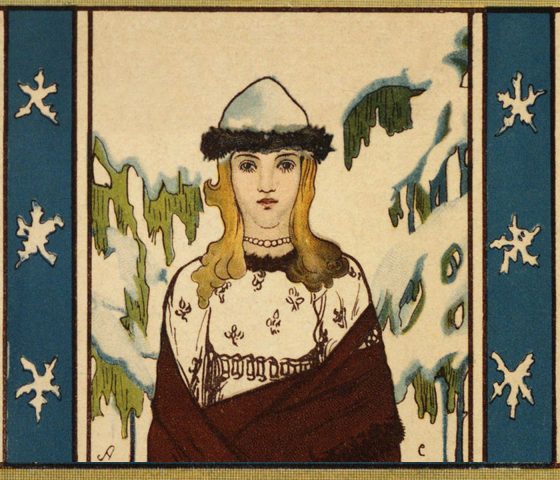
1916 Snegurochka from Wikipedia

Tamagotchis, AI companions, cars, and even rumbas have people that are heavily emotionally invested in these inanimate and abstract things, giving them pet names and interacting with them as if they were invested with souls. Perhaps humans jump to anthropomorphism inanimate objects faster than other species. But we are not alone in attributing life in this way. I wonder if intelligent life that evolved on other worlds possesses this trait as well? Is it a sign of higher consciousness or is it just an Earth thing?

Essence

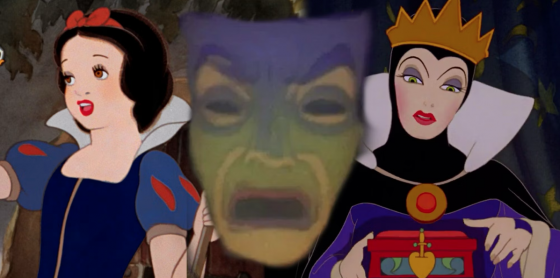
Snow White

Stories can bring the salient details of life to light. Real life contains a lot of noise and extraneous detail that can obscure a through line. Fictional stories remove that noise to rise the core themes and emotions to the surface for observation and examination. Fictional stories both pare down and embellish real life. They zoom in on the important stuff and focus the reader’s attention squarely there. When the story captures something true about the lives of its characters, it binds us to them. Usually, we find a story engrossing when we care about the characters and want to see what happens to them. While some portrait painters insist on live sittings with their subjects, it’s easier — although perhaps more facile — to start with a photograph. Photographs manage to capture some essence of personality, to flatten it into something easier to paint, simplifying the process of portraiture. Caricatures identify particular features of their subjects and render them in a ruthless way. In the realm of words, identifying salient features in characters and their world makes them more memorable and makes their actions more comprehensible. Perhaps caricatures resemble jokes in this way. Last month, I wrote about fairytales.…

Builders

Adventures into High Strangeness Header

Humans are builders. We are all given different talents and resources in life that we use to try to construct happiness for ourselves and for those we love. This continuous process of creation is not only quintessentially human but also the most common thing all animals do. All animals build, humans just take it to another level. We write and read books, make and play games, create and watch movies, paint and sculpt stories, weave musical ballads and landscapes. We are able to envision other lives and share those visions with others. I think that’s an amazing facility. We believe that we’re unique, as humans, for building by using our prodigious imagination. We don’t only build in physical and social realms, we craft fully imaginary worlds populated with people and other creatures. Perhaps whales, apes, or even other animals — the octopus? a colony of termites? — also dream up stories. It’s hard to know. I have always lived in my imagination. As a child, I made elaborate sets and toys to act out stories for myself and my friends. Our apartment gradually filled with paper and fabric cities, castles, and little animals made from scraps; I used to make…

We Own Nothing

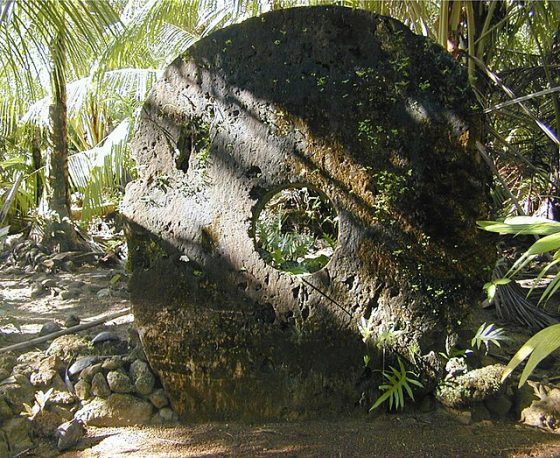
Yap Stone Money

We are living through an interesting transition as we change our relationship with physical possessions. Physical ownership is giving way to a preference for virtual goods and services. For millennia, societies operated on a “favor bank” system, where performing favors for friends and members of the community built goodwill. This mutual support was crucial during hard times. Money and trade goods came later. Personal wealth evolved from physically holding valuables to entrusting them to banks. Today, banks themselves are a web of promissory notes, not physical reserves. Caption: Not all money was easily carried about. Rai stones for instance, remained stationary. Their ownership was determined through community consensus in the societies where they were valued. We store our financial assets in the cloud. Money, stocks, property titles, and insurance policies exist mostly in digital realms. Who actually holds physical stock certificates now? While we physically possess homes and cars (and even that might change), our ownership rights are digitally recorded. Our educational achievements and professional credentials are traded electronically. Our libraries of books, music, or games have transitioned from physical shelves to digital storage. Memories, once preserved in photo albums, calendars, and diaries, are now captured in digital formats and…