Monthly Archives: September 2011

The Cultural Context for Product Design

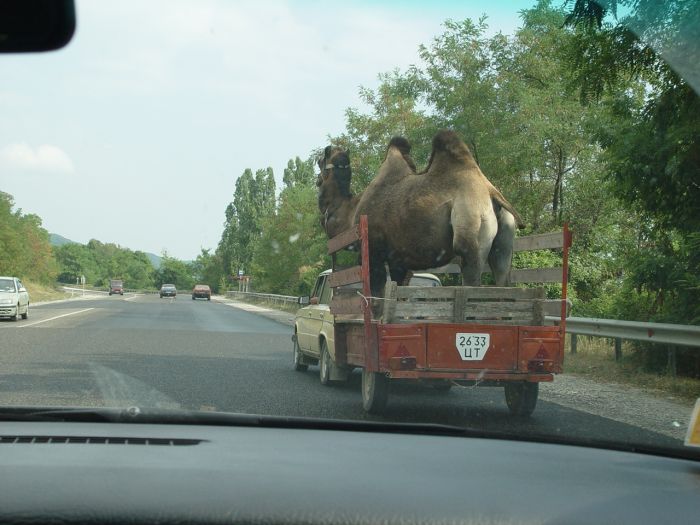
Nothing exists in isolation. Design divorced from the context in which the product is used is of little value to its audience. Cognitively, this makes sense—most designers agree that they have to consider the environment, culture, and situation as part of the process of developing a new product (or redesigning an old one). But practically, context and culture get little play in design meetings. This post is aimed at relieving some of designers’ mirroring errors—helping see alternate ways their products might be used in the real world. Enjoy! Cultural Difference in Car Use: livestock Cultural Difference in Car Use: large loads Cultural Difference in Bike Use: large loads Notice the little bike on the left… Cultural Difference: people movers

Cultural and Subject Matter Knowledge

What is that?! Is that what I think it is? These toys were part of a window display in a little store in the center of Rome. I don’t believe a lot of kids play with Nazi toy soldiers…in Italy, today. But if WWII turned out differently, these might have been the coveted toys, not just for a limited set of adult collectors, but for average, everyday kids…who happened to be living in an alternate reality. So this brings me to the main point of this post: products have to have cultural relevance, and this requires designers to have a good grasp on social background knowledge and on the subject matter within which they are working. Consider this little street sign in Rome as another example of cultural and subject matter relevancy: If you click on the image, you can get a larger version—yes, it is a crucifix with Jesus icon. Here in San Francisco, this sign wouldn’t work. But in Rome, it makes perfect sense. It’s culturally relevant and conveys information to the local population. Both of these examples show that it’s not just cultural knowledge that’s important. Without knowing the meaning of a crucifix or being able to…

Community of Practice and Knowledge Propagation Circle

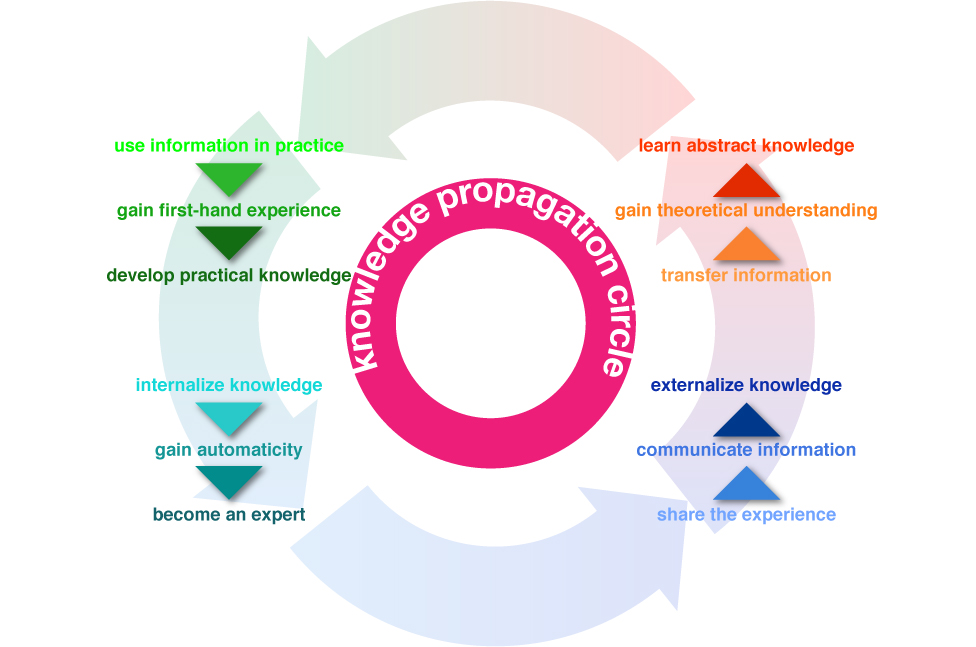
This summer my family and I travelled to Rome. While the temperatures didn’t reach the usual astronomic heights, it was rather warm. But we, and other visitors, didn’t have to worry about thirst. Rome has the best network of public drinking fountains that I have ever seen. Every few blocks, there’s a beautifully-designed basin with a spigot of continuously running water (I know, being from California, the never-ending stream made us very uncomfortable, too). There are two bits of information that have to be passed on to the first-time visitors of Rome: the water is potable—safe to drink, and how to use the fountain—there’s a bit of a trick to them. Above is my son demonstrating a little secret interaction. There’s a small hole on the top of the pipe that can serve as drinking fountain if the main hole at the end is plugged up (with a finger). While we learned about the great drinking water in Rome from many traveling guides (books, online sites, etc.), we obviously didn’t know about the trick until we watched a pro do it. Knowledge Propagation Circle Information propagates through communities. When we first encounter a novel bit of data, it tends to…