
I’ve written several times in my newsletter describing my writing style as one of a “pantser” or a “gardener”. This means when I start writing a story, I don’t have an outline, just a vision. I discover what happens as I go along. That is not to say that I don’t have an idea of the destination; it’s just that I find my way there by feel, by the seat of my pants, or, as others prefer, by planting a garden full of ideas and watching what grows. Other novelists approach writing from a completely different end. The “architects”, as those writers are sometimes called, like to have a full outline of their story, a well-defined world and magic systems, and carefully worked out characters. You can say that the “pantsers” and the “architects” are at the opposite ends of story crafting spectrum. Obviously, no one is 100% pantser, and few people are all the way at the other end of the spectrum. Most are somewhere along the continuum. Personally, I do have the shape of a story in mind before embarking on the journey of writing a book. I have an idea about the characters, and I know the setting (kind of). But I’m often surprised where the story leads me. I can’t imagine an outline that gives away all of the twists and turns of the novel before I start writing it. That would kill my creative process completely — I’d be done with that story before putting down the first sentence. I’m sure the “architects” are horrified by my loosey-goosey approach, just as I’m overwhelmed by their rigidity. But recently, I realized that my pantsing style is not only for writing. This is how I approach most problem solving.

I was thinking about how I begin a painting. I might have a few sketches, very loose. I might have a vision for a color pallet. I go out and buy a canvas. Mostly, I look for what sizes are on sale (or I have a cool frame), but I have a sense of a composition. It’s never one idea. It’s several thoughts that I kind of have in mind as I layout the initial strokes on canvas. Then I usually completely fill the canvas with color. And only then do I start figuring out the true scope of details. But the size, the color, the shapes, and the details are murky in my head until my fingers show me my vision. That sounds pretty “pantsy” to me.
This is true of sewing. I have an idea. I go to the store to see what cool material might be on sale. Then, I wing it. I know enough that most of the times it works out as if I did it all intentionally, with patterns and all. This works for me in the kitchen, too. I go to the store. I know how many I need to feed. I see what looks good and what’s on sale. And then I go home and try to make it happen in under 1.5 hours. I used to say that no cooking project takes less than an hour. I’ve revised this estimate to closer to two — I guess I’m getting older.
My problem solving process, regardless of what I’m creating, is based on what I need and what is doable, and then on whether I am going to enjoy doing it. It’s important to love the task one is working on; otherwise what’s the point? Another very important aspect is the ability to recognize when something is not working and to switch to a different plan. I think for pantsers, such direction changes might be less of an obstacle than for architects. It’s easier to give up on a plan if you never really had one, right?
Now, I couldn’t pull any of this off if I didn’t have enough art education and experience; if I didn’t grow up with a grandmother who was seamstress and whom I watched for decades work on cool project and who let me have fun with her left overs; if I didn’t spend many many years cooking dinners for my family almost every day. Flexibly in problem solving comes with expertise.
So while I might not really have a plan of action, I do have ideas. And those ideas hopefully lead me to a satisfactory result. But it is remarkable that this self-awareness about my own problem solving approach didn’t strike me earlier. For while I knew and was very cognizant of how I write, I never gave much thought to other aspects of my life where creativity comes to the fore. So this Thanksgiving, I’m thankful for finding a bit of awareness and for the people who surround me with love and understanding while I’m being creative.
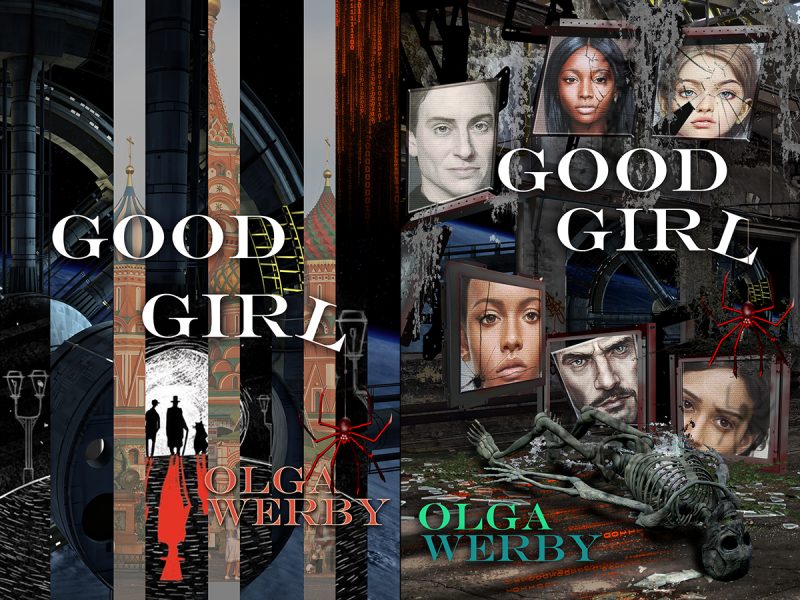
And now that you’ve gotten to the end of my ramblings, here’s a free book (available on Amazon until 20th of November): Good Girl. And here’s a puzzle: how would a pantser write this?