
Can evolution shape the world humans made for themselves? Can natural selection work on man-made objects? Can it work on the stories we tell ourselves as a society?
Allow me to introduce a little bit of biology here. Natural selection works on individual genes. A random mutation does something beneficial to an individual organism’s survival, and so it passes on that mutation to its offspring. Most mutations are not beneficial. Some are catastrophic, leading to an early death of an individual. Majority are neutral — they don’t help but they also don’t hurt the organism’s ability to survive and reproduce. This is how evolution works now: genetic material is vertical passed on to the next generation. But that’s not how it all started.
In the earliest days of life on earth, there were only cells that had no nucleus — prokaryotes — which reproduced by splitting into identical clones. The cell structure hasn’t really been stabilized yet — things were so porous, that genetic material could easily drift between individuals in a group, spreading variations that way. These lateral gene swipes were more common than inheritance via vertical passing on of genes. Lateral swipes of genetic material happen when individuals within a group “trade” genetic material with each other. All lateral gene swipes are thus really group based — you need a group with in which individuals share their genetic codes. The problem is that natural selection can’t act on individuals whose cell structures didn’t stabilize yet and whose most genetic variations are lateral and not vertical. If the gene sets are not stable — too much sideways movement and sharing of genes in a group — then natural selection has nothing to work with. Natural selection works on organisms, but it selects for particular genes.
It seems to me that this lateral swapping of genes is very similar to design and development of products. Cool features are freely borrowed (or stolen) from products that seem to enjoy success in the market place. Things like interface and interaction elements are continuously adapted from vacuum cleaners to computers to cars. Over time, consumer-preferred features dominate the market. Thus interesting design “genes” take over across many product categories. This even works on color! And it works on stories too — the type of books people prefer to read continuously change from vampire romances to super hero adventures to literary fiction to self-help books. As the skirt hems move up and down so do the interests of publishing houses and their editors.
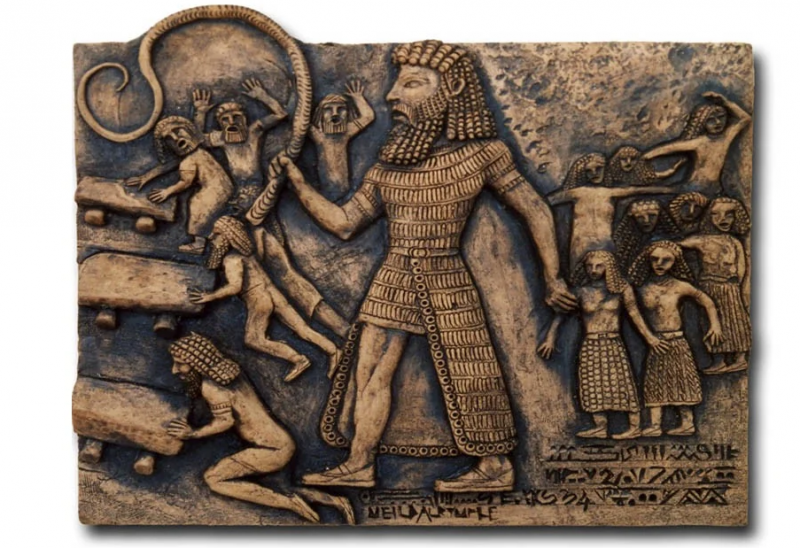
One of the earliest recorded fictional stories is Epic of Gilgamesh (c. 2100 BCE), that’s way over four thousand years old. It’s a tragic tale of brotherly love and adventure through the known world and beyond. There are numerous translations of this story into modern languages and style, but the structure of the story is very linear without parentheticals or other modern story-telling inventions. A story like this just wouldn’t sell in the modern book market. Epic of Gilgamesh is the book of its times, dated in its style and presentation and vocabulary. This is true for many books of fiction. Princes of Mars by Edgar Rice Burroughs uses correspondence between John Carter and his friend on Earth as a story-telling device. This just wouldn’t work with a modern audience. I find that it is difficult to read anything written in English language at the turn of the previous century — too racist and incredibly sexist, and the format is too awkward, of course there are exceptions. Novels are the products of their times, and times move on. There are different trends and fashions now, not all will be politically acceptable 100 years from now, I’m sure. Even historical fantasies published today, set in the Victorian Era or during the day of Roman gladiators, adjust the narrative and character traits to appeal to modern audiences. The natural selection for fiction is continuously editing and weeding out what’s no longer acceptable by modern standards and sensibilities and evolving it into something that is.
But what is doing the “selecting” for the new and more resilient traits in literature? To get noticed, especially on the indie markets, a story needs a lot of help from not just readers but “reader influencers.” Those are the people with huge online followings that can set the trends; their book recommendations carry a lot of weight and can land a story on New York Times best seller lists. Oprah and Reese Witherspoon’s book clubs are literary influencers that can make or break an author. I’m sure there is a lot of jockeying for position to get onto those reading lists by publishers and authors and editors. These are the natural selection pressures of our times for stories. And once those influencers make their verdicts, there are stories that become must-reads and become adapted for TV and movies and those which become non-sellable at a stroke of a word. The themes and ideas that have been chosen to become the “it” stories — consider the whole vampire trend in fiction after Twilight series. Some will make lateral “genetic” moves into other human-made objects. The dress code and furniture and even food might get made to accommodate these new trends. Boys will dress up as street assassins or Call of Duty soldiers. People will go out to drink Butter Beer. Houses will add towers and nooks under the stairs. Corsets will come back as fondly-remembered dress accessories rather than the weirdo trend among a small minority of late 18th and early 19th century fashionistas that glorified artificial body shapes.
What we like evolves. It doesn’t only evolve as we go through life, but also as societal preferences and norms change over time. Language also changes and so do the objects we use everyday — just try asking teenagers (or kids in general) how rotary phones work, for example. Products, architecture, and stories are continually evolving and selecting for traits that we and our influencers find more useful and appealing. Unfortunately, lots of interesting designs and solutions get overlooked along the way. Like evolution, luck is a major component of the force that decides what stays and what goes.