
What other species of animals accumulate wealth over several generations?
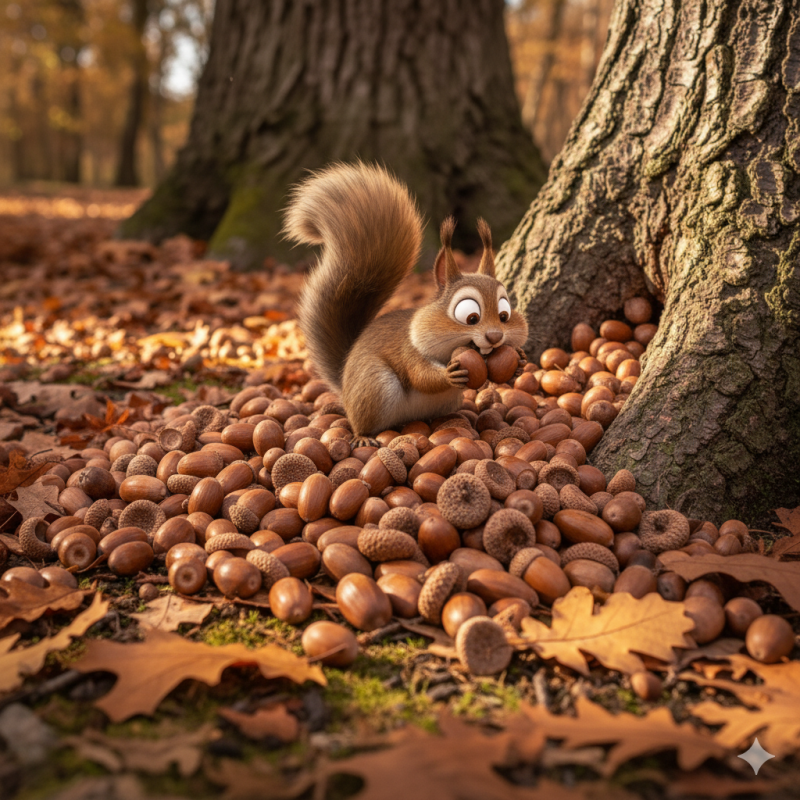
The other day, my husband and I were watching birds and squirrels dig around in our garden. “They are just trying to make a living,” my husband said. And it got me thinking — squirrels and birds have to find food and shelter everyday to survive. If they don’t find food, they go hungry. If they don’t find shelter, they suffer the elements and predators. Humans used to live the same day-to-day existence in our distant past. But now, we work hard to pass on the fruits of our labor to the next generation. But are there other animals that do the same?
The largest known colony of ants is Linepithema humile, the Argentine ant. It has a contiguous colony from Northern Italy to South of France to the coast of the Atlantic in Spain — about 3,700 miles. It’s been around in Europe for about eighty years and is believed to have started in South America some 100 years ago. If there’s power in numbers and years, these 2 millimeter ants have it is spades. [https://www.guinnessworldrecords.com/world-records/largest-colony-of-ants] The largest colony of termites, another social insect, is over four thousand years old and is about the size of Great Britain! It too is in South America.
It’s not only social insects, of course, that pass on their wealth to future generations. Birds and mammals do it too. Rabbits live in underground structures called warrens. It is the job of female rabbits to make these structure that could have over 150 entrances, 200+ nodes, over a hundred chambers. [The History and Structure of a Large Warren of the Rabbit Oryctolagus cuniculus at Canberra ACT] Many generations of rabbits grow up in such mega-bunny cities, and doing so improves individual survival. For a more literary exploration of rabbits’ lifestyles, consider reading the classic: Watership Down by Richard Adams. I read it a few years back; it’s not just for kids. Prairie dogs and meerkats also form large underground cities that are used for generations of animals, improving the survival of pups with each generation. Beavers are notorious builders, creating giant water structures that dam rivers and change water flows up and down stream for many miles. These structures are grown and repaired by many generations of young beavers. There are bats that occupy the same caves and some birds that nest in the same place, year after year over multiple generations. And there are coral reefs homes that are passed down among families of fish.
Basically, animals that live in a large colony and create massive construction projects that lasts multiple generations are passing down their wealth to subsequent generations. With each generation, baby animals are born into a more secure environment than their parents when it comes to food and shelter.
Humans used to be hunter-gatherers. We carried everything we owned as we moved from place to place, following food. Certain locations were too good to give up, like caves in what is now Southern France and Northern Spain. But the big change was agriculture. Agriculture rooted humans to a particular spot so that, after so much investment in the place, they could reap their harvest. As the climate changed and got colder, survival required storing food for lean months and securing shelter from the elements. Caves and other advantageous natural shelters were worth fighting for and defending, as were built structures. Agriculture and the need for permanent housing changed how humans lived and their perception of what was valuable. If before, we could carry everything we owned with us as we moved from place to place, now incentives changed. We could start to accumulate wealth — generational wealth. As we were already defending our homes and fields, we now had a place to store other valuable goods.
Permanent settlements changed how we lived and the communities we formed. While bands of hunter-gatherers were small by necessity, agricultural settlements needed human power to maintain, and populations grew. Families also changed. Children inherited the accumulated wealth of previous generations and there was less movement — generational wealth tied individuals to a specific location and made moving to a new one costly. For thousands of years, humans found themselves anchored to their places of birth. When people did move, they tried to take with them as much of their wealth as they could.
There is a wonderful photograph taken at Ellis Island of Theano Papasotitiou, traveling from Greece to join her husband in San Francisco. She was wearing pounds of gold in coins around her neck and sewn into her dress:
https://scalar.usc.edu/works/let-me-get-there/greek-woman-1909
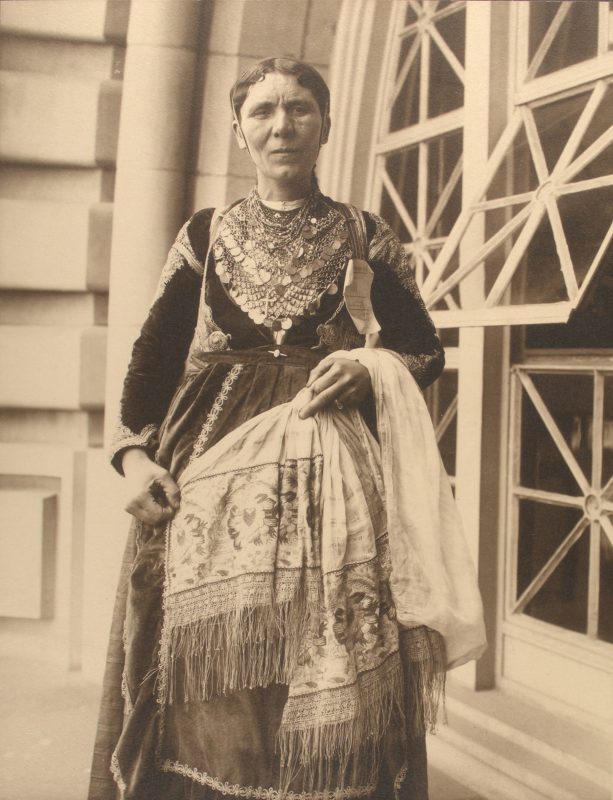
“An old Greek woman who wore a lace shawl on her head and $4000 in gold coins strung on chains around her neck and arms as ornaments. She was a shrewd and intelligent individual, being fully informed about our methods, and knowing exactly how to reach San Francisco, where she was going to join her husband.” – William Williams, Commissioner of Immigration at Ellis Island [James B. Morrow, “Keeping out the Undesirables [William Williams] keeps tab on the Tide of Immigration,” The Indianapolis Star, October 03, 1909, 35.]
The one thing we can count on in life is that things change. And even as humans gathered their wealth as physical belongings for many thousands of years, the age came when we could do so virtually via banks, stocks, and other investments. While in previous ages, people moved to improve their life’s circumstances (e.g. migration motivated by disasters, war, and persecution); the last few decades gave us the digital nomads — individuals who feel liberated from a permanent “home” location and who are able to work their trade remotely from anywhere and save their wealth independently from the location/country they are in. Perhaps nomadic life-style has always been in us just waiting for an opportunity to return, or perhaps we engineered this opportunity just to free ourselves from physical assets we can’t carry on our backs. Either way, infrastructure was needed to make this possible: safe “location” to store wealth, availability of housing that could be rented, and a feeling of personal safety irrespective of how far we are from our community of birth. We no longer need to carry all of our acorns on our backs and know we will be welcomed, for a price, by other squirrel communities. That’s quite a level of domestication that even the most industrious bees can never achieve.
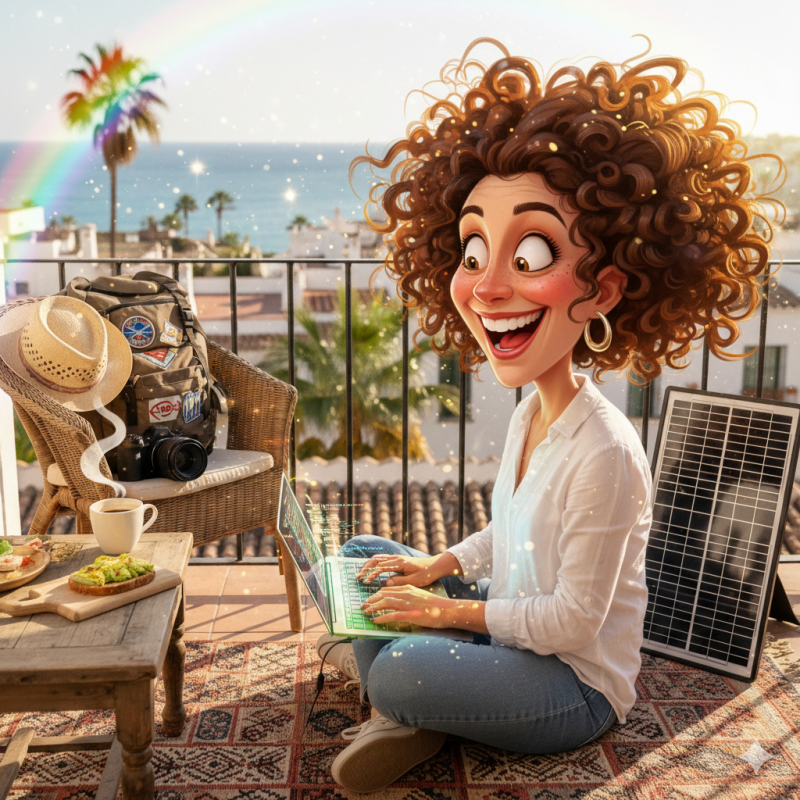
And so it goes even with stories. We have a library of thousands of books in our home. But for the last decade or more, I’ve been buying mostly digital books. Not only had we run out of physical storage, but now I can take my library anywhere with me. It fits in my pocket! I might not be a digital nomad, but I’m a digital nomadic reader. I hope I can “download” my literary treasures to my next generation, so long as that doesn’t violate my books’ terms of service.