
The Dutch have a word for a feeling that encapsulates “finding happiness in someone else’s happiness:” gunnen. This would be the opposite of a German word: schadenfreude — a pleasure derived from another’s misfortune. Slapstick comedy depends upon schadenfreude. Two-year-old children have been observed to enjoy the mishaps of others. Tom and Jerry, The Road Runner Show, The Pink Panther and many other kids’ cartoons use schadenfreude as the engine for their comedy. The use of the word schadenfreude took off (exponentially) around the 90s. The use of the word gunnen, on the other hand, has been flat since the turn of the previous century. We can speculate on whether this means that we would rather pleasure ourselves with the tragedies of others rather than get joy from seeing people happy, but that’s not really here nor there. I’d rather live in the gunnen world than the schadenfreude one, but perhaps slapstick and cartoons would have suffered for it.
I often write that reading books helps develop empathy. I’m witnessing this development now first hand as I observe the blossoming of my granddaughter’s full repertoire of feelings. She is about to turn four. We read a lot together, and she demands that I tell stories “from my own mouth” every night. Her feelings are all on the surface, and she regularly cries at sad moments of the story that she relates with strongly; she insists that the stories all feature her as the protagonist. I focus on telling stories where she is the hero that saves the world by making others happy. I want to develop strong gunnen feelings in my little girl. We avoid schadenfreude completely. And I haven’t seen much schadenfreude in kids books. In young adult literature, if it’s there, it’s as a means to identify the bad guys — a literary shortcut to character like kicking puppies.
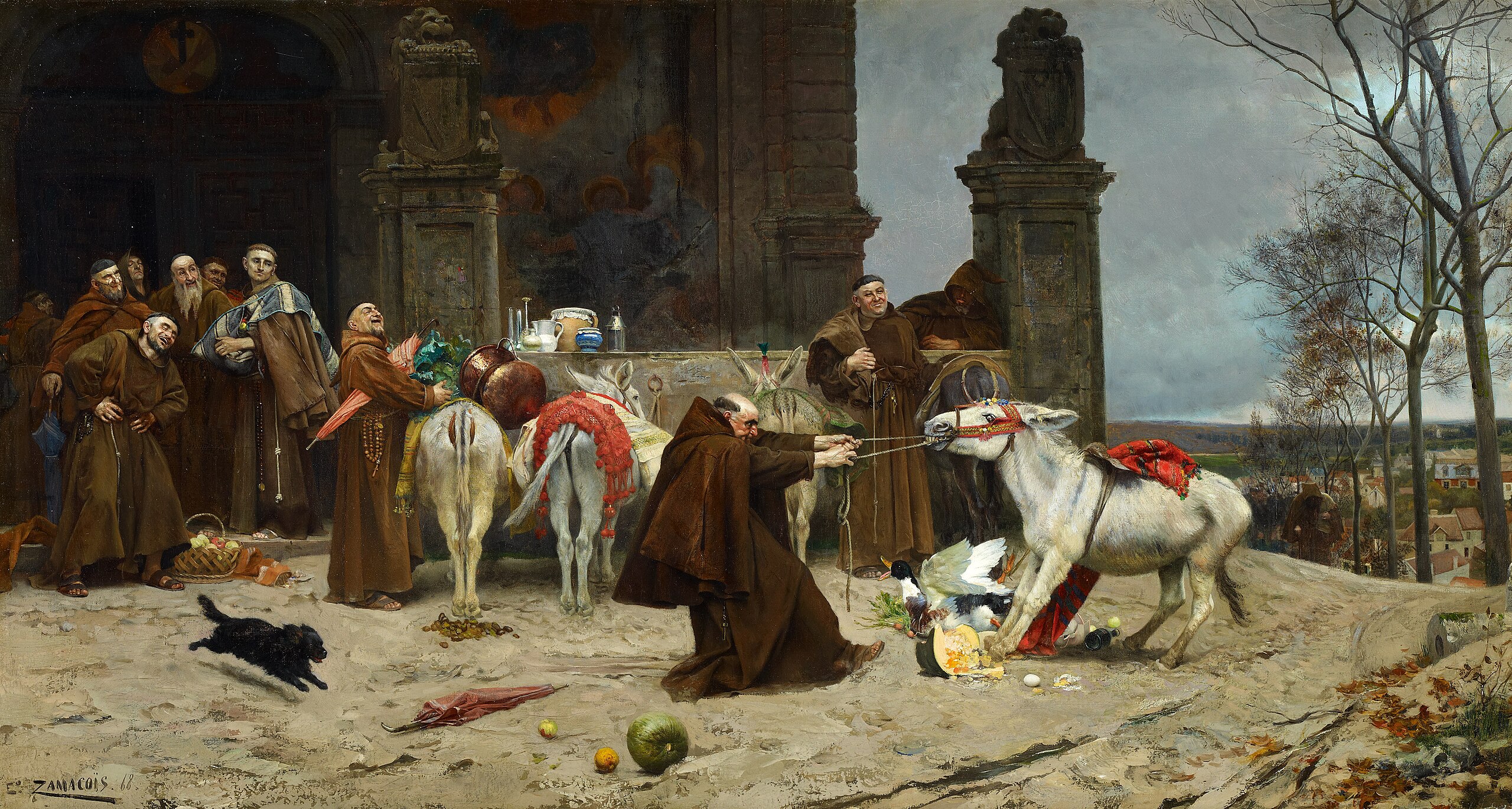
We all can understand the mirth of the laughing monks in the background — schadenfreude in art.
Schadenfreude is almost never an emotion in any of my stories — it’s not what motivates me in life, and so I rarely rely on it as a narrative device. But I use gunnen often, probably in all of my stories — my characters derive joy from the happiness of those they love. There is another emotion that I feature quite often in my books: empathetic pain and sadness. My first novel, Suddenly, Paris, was all about empathetic reactions, souls resonating in tune with each other. This book is part of this month’s free ebook offerings.
This December, when you are looking for holiday gifts and experiencing gunnen from anticipation of joy your presents will give, please consider gifting stories to your loved ones. Books make the best presents — they not only capture attention in the moment of presentation, but hold it for the duration of the story and hopefully beyond.

Happy holidays and happy reading!